Brake Caliper Painting in Abu Dhabi: Paint vs Powder Coat, Process & Durability
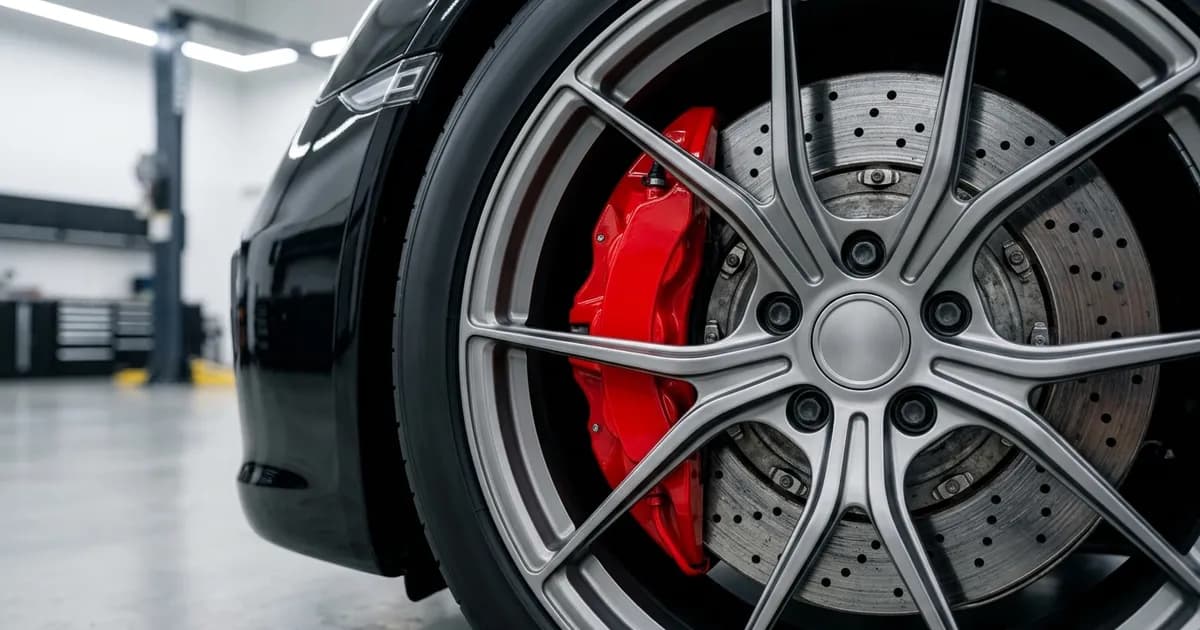
Brake calipers are refinished in one of two ways. The first is high-temperature caliper paint, applied after deep cleaning and careful masking. The second is powder coating, where the calipers are removed, stripped, oven-cured and rebuilt with new seals. Paint is faster and less expensive. Powder coating is tougher and longer-lasting but involves rebuilding part of the brake system. Neither method changes braking performance.
Key takeaways
- Caliper painting is cosmetic. It improves the look, slows surface corrosion and makes brake dust easier to clean off. It does not improve stopping power.
- Preparation decides how long it lasts. Most premature peeling is caused by poor cleaning and degreasing, not by the paint itself.
- Some parts must never be painted: the disc's friction surface, the brake pads, rubber hoses, the bleed screw, the piston dust boots and the sensor wires.
- Caliper covers are not recommended. Clip-on covers can trap heat and may come loose.
- The best time to paint is during a brake service, when the wheels are already off.
Why do owners paint their brake calipers?
- Appearance. A coloured caliper behind an open-spoke wheel is one of the most visible styling upgrades you can make.
- Protection. Factory bare-metal calipers tarnish and corrode. A heat-resistant coating slows that process.
- Easier cleaning. Brake dust wipes off a smooth painted surface more easily than off rough cast metal.
- Restoration. Factory-painted calipers fade with UV and brake heat. Refinishing brings them back.
Paint vs powder coat vs caliper covers
| Method | How it is done | Pros | Cons |
|---|---|---|---|
| High-temperature caliper paint | Calipers deep-cleaned and masked (on or off the car), then several coats of caliper-specific heat-resistant paint, sometimes with clear coat | Faster, lower cost, no brake system strip-down needed in most cases | Less chip-resistant than powder coat, and durability depends heavily on preparation |
| Powder coating | Calipers removed and stripped, seals and pistons taken out, powder baked on in an oven, then rebuilt with new seals and the brakes bled | Very hard, glossy, long-lasting finish | Takes longer, costs more, and requires a full caliper rebuild and brake bleed |
| Clip-on caliper covers | Plastic or metal shell fitted over the original caliper | Cheap and instant | Can trap heat, rattle or detach. Not recommended. |
How professional caliper painting is done: step by step
- Brake inspection first. There is no point painting over worn pads, scored discs or a leaking caliper seal. Any brake faults are fixed before painting.
- Wheels off, car safely supported. Painting through the wheel spokes never gives a durable result.
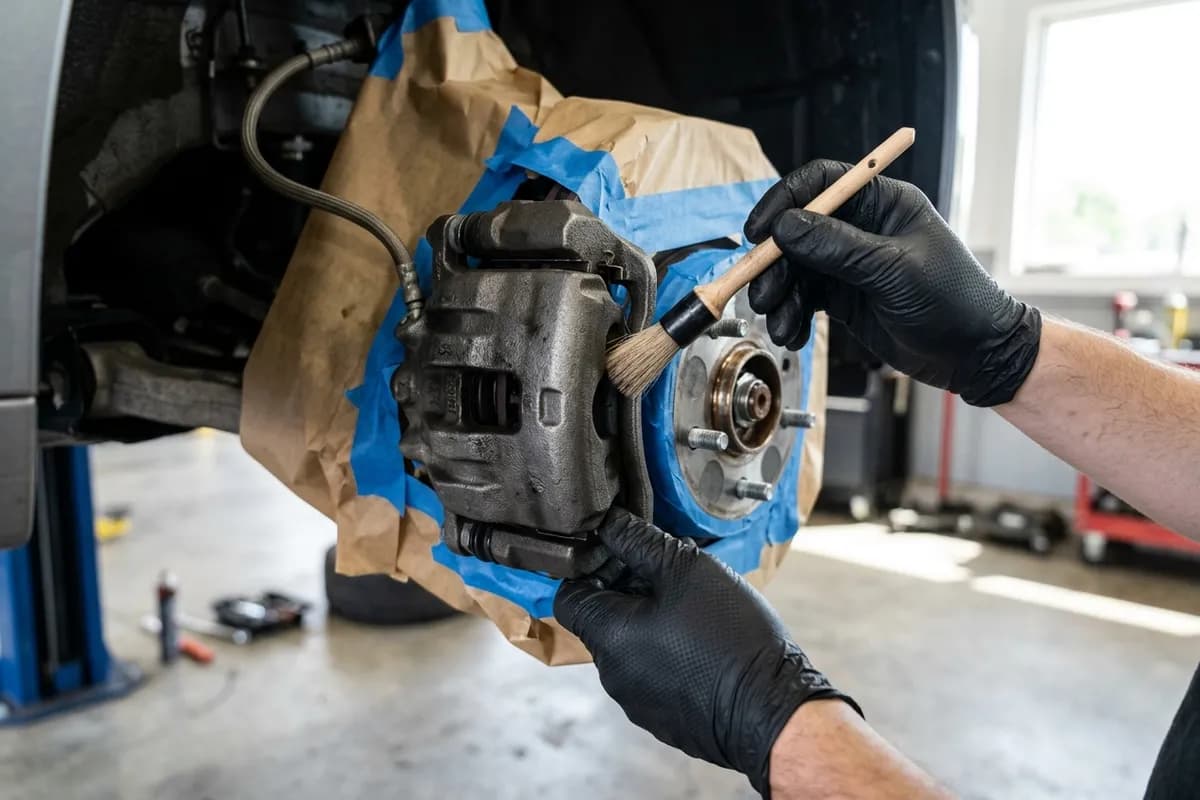
- Deep clean and degrease. Brake dust, road film and rust are removed with brushes, brake cleaner and degreaser until the surface is bare and dry.
- Mask everything that must stay clean. The disc, pads, brake hose, bleed screw, sensor wiring and piston dust boots are fully covered.
- Prime if the paint system requires it.
- Apply two to three thin coats of caliper-specific high-temperature paint, allowing the recommended time between coats.
- Optional clear coat for extra gloss and resistance to brake dust.
- Cure as the paint manufacturer specifies, then remove the masking.
- Refit the wheels, torque them to the manufacturer's specification, and road-test the car.
What should never be painted
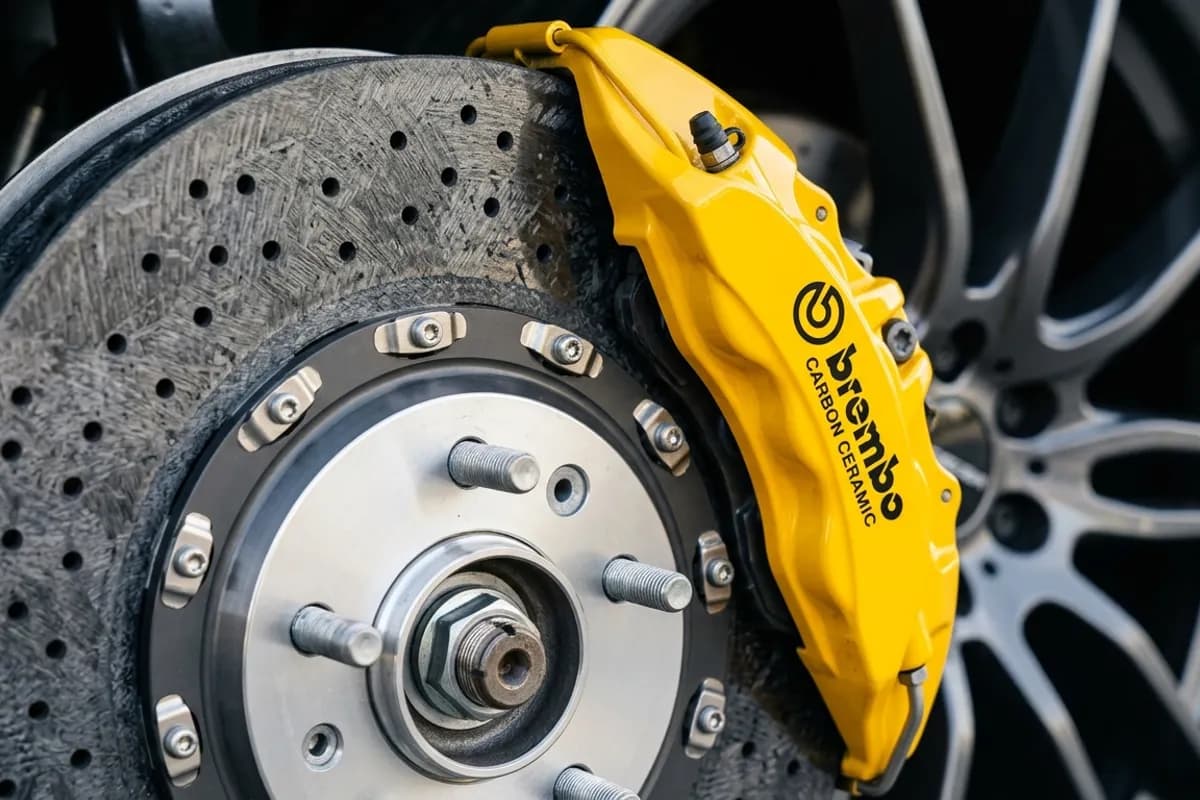
- The brake disc's friction surface. Paint here dangerously reduces grip until it wears off. Carbon-ceramic discs must never be painted at all.
- Brake pads.
- Rubber brake hoses, piston dust boots and seals.
- The bleed screw, including its threads and opening.
- ABS and pad-wear sensor wiring.
Caliper polishing and refreshing factory colours
If your calipers are already painted from the factory but look faded or stained, a full repaint is not always needed. A refresh involves:
- A thorough decontamination to remove embedded brake dust.
- Gentle polishing of the painted surface.
- A protective coating to help repel future dust.
This works well on cars where the original finish is intact but dull.
How long does caliper paint last in the UAE?
Abu Dhabi is demanding on any exterior finish. Strong UV, sand, high ambient heat and repeated brake-heat cycles all take their toll. A professionally prepared, properly cured caliper paint finish can last for years with sensible cleaning. Powder coating generally lasts longest. To protect either finish:
- Clean the calipers with a pH-neutral wheel cleaner, not harsh acid-based products.
- Rinse brake dust off regularly rather than letting it bake on.
- Use a soft brush that reaches behind the spokes without scratching.
Choosing a colour
Pick a colour that ties into your car's body colour, interior stitching or wheel finish. Classic choices are red, yellow, silver, black and body-matched shades. Bear in mind that on some performance brands certain colours are associated with specific factory brake packages. Some owners prefer not to imply an upgrade their car does not have.
Get your brakes checked before you refinish
Whoever refinishes your calipers, start with a brake inspection. Painting over worn pads, scored discs or a leaking caliper seal only hides a safety problem. At our workshop in Mussafah Industrial Area M-14, we inspect pads, discs, caliper seals, sliders and brake fluid, and give you an itemised quote before any work starts.
All brake work is covered by our 12-month / 20,000 km warranty. Find out whether your car needs new pads, discs or both, or see our brake repair service.
Need Immediate Diagnostic Assistance in Abu Dhabi?
Our 24/7 mobile response vans carry PIWIS 3, XENTRY, and ISTA+ factory diagnostic computers directly to your villa or parking tower in 20 minutes.
Frequently asked questions
Q: Does painting brake calipers affect braking performance?
No. Caliper painting is purely cosmetic when done correctly. It does not change clamping force, pad grip or heat dissipation in any meaningful way. Braking is affected only if paint gets onto the disc friction surface, the pads, or moving parts such as the piston boots, which is why proper masking is essential.
Q: How long does brake caliper paint last?
With thorough preparation, caliper-specific high-temperature paint and proper curing, a painted finish can last for years. Powder coating usually lasts longest. Poor degreasing before painting is the most common cause of early peeling.
Q: Can calipers be painted without removing them?
Yes. Many professional jobs are done with the calipers still mounted, as long as the wheels are removed and everything around the caliper is carefully masked. Powder coating is different: it always requires the calipers to be removed, stripped, oven-cured and rebuilt with new seals.
Q: Is powder coating better than painting brake calipers?
Powder coating gives a harder, more chip-resistant and longer-lasting finish. However, it takes longer, costs more and requires a full caliper strip-down, rebuild and brake bleed. High-temperature paint is the practical choice for most owners, and it gives an excellent result when prepared properly.
Q: Can I paint the calipers on a car with carbon-ceramic brakes?
The calipers themselves can be refinished, but carbon-ceramic discs must never be painted or exposed to paint overspray, solvents or abrasives. Discs and pads must be fully protected throughout the job.