Ford EcoBoost & V8 Engine Problems in the UAE: Symptoms, Causes & Repair vs Rebuild
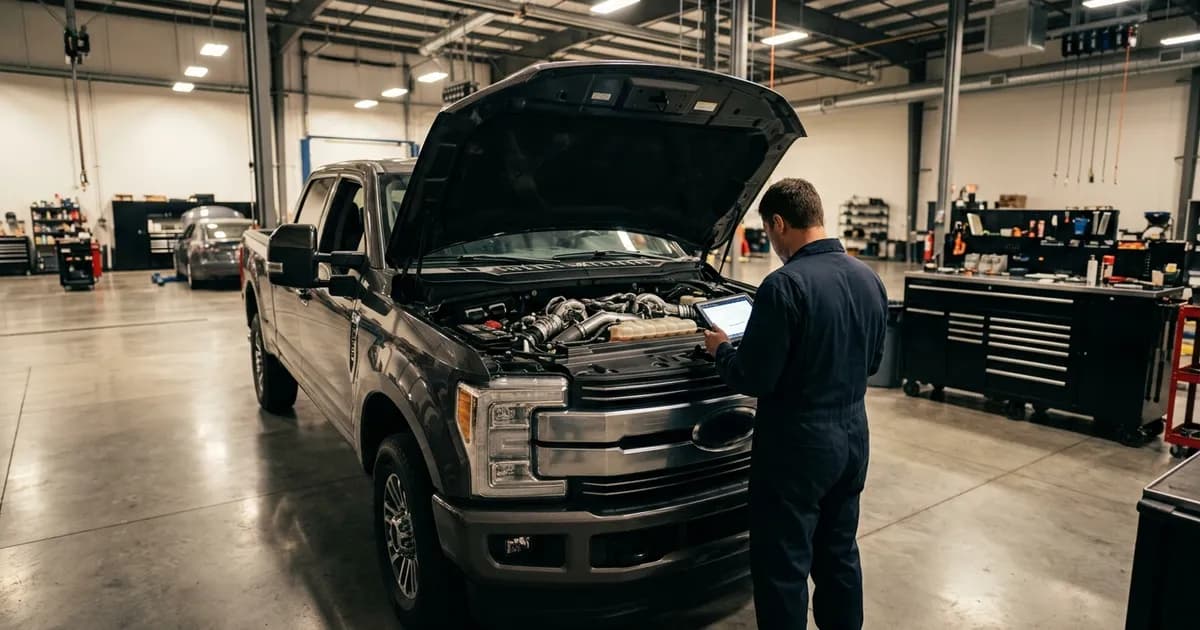
These are the most common Ford engine problems we see in the UAE: - Timing chain wear and cam phaser rattle on the 3.5L EcoBoost V6 - Coolant intrusion on certain mid-2010s 1.5L and 2.0L EcoBoost engines - Carbon build-up on direct-injection engines - Higher oil consumption on some 5.0L V8s Sustained heat accelerates all of them. Caught early, most can be repaired. A full rebuild or engine replacement is usually only needed when warning signs are ignored.
Key takeaways
- Identify your exact engine first. The engine depends on model, year and specification (GCC or imported). A VIN check confirms it.
- On the 3.5L EcoBoost, a rattle on a cold start is the classic early warning. It points to the timing chain or cam phasers.
- Coolant loss with no visible leak is a red flag on affected 1.5L and 2.0L EcoBoost engines. Do not just keep topping it up.
- UAE heat shortens oil life. Turbocharged engines are especially sensitive to oil condition.
- A flashing check-engine light means stop driving. That is a severe misfire, and continuing can damage the catalytic converter and the engine.
Which Ford models and engines does this cover?
Ford models we commonly see on UAE roads include the Explorer, Edge, F-150, Expedition, Mustang, Ranger, Bronco and Territory. Depending on model year and specification, these use engines from the EcoBoost turbocharged family (1.5L, 2.0L, 2.3L, 2.7L, 3.0L, 3.5L) or naturally aspirated engines such as the 5.0L V8.
Ford engine and parts specifications vary between markets, so a VIN check is the first step before any diagnosis or parts order.
The most common Ford engine problems
1. 3.5L EcoBoost: timing chain wear (mainly earlier engines, about 2011–2016)
Symptoms:
- A rattle for a few seconds on a cold start
- A check-engine light, often with camshaft/crankshaft correlation codes (P0016–P0019)
- Rough running
Why it happens: The timing chain stretches over time. Extended oil-change intervals and degraded oil make it worse.
Fix: Replace the timing chain, guides and tensioners. Inspect the cam phasers at the same time.
2. 3.5L EcoBoost: cam phaser rattle (about 2017–2020)
Symptoms: A loud rattle on cold start-up that fades as the engine warms, sometimes with a check-engine light.
Why it happens: Owners widely reported cam phaser problems on second-generation engines. Ford later revised the phaser design and, in the US, extended warranty coverage for affected models.
Fix: Replace the cam phasers with the updated design, usually alongside the timing components. If your car is still under warranty, check with the dealer first for any applicable campaign.
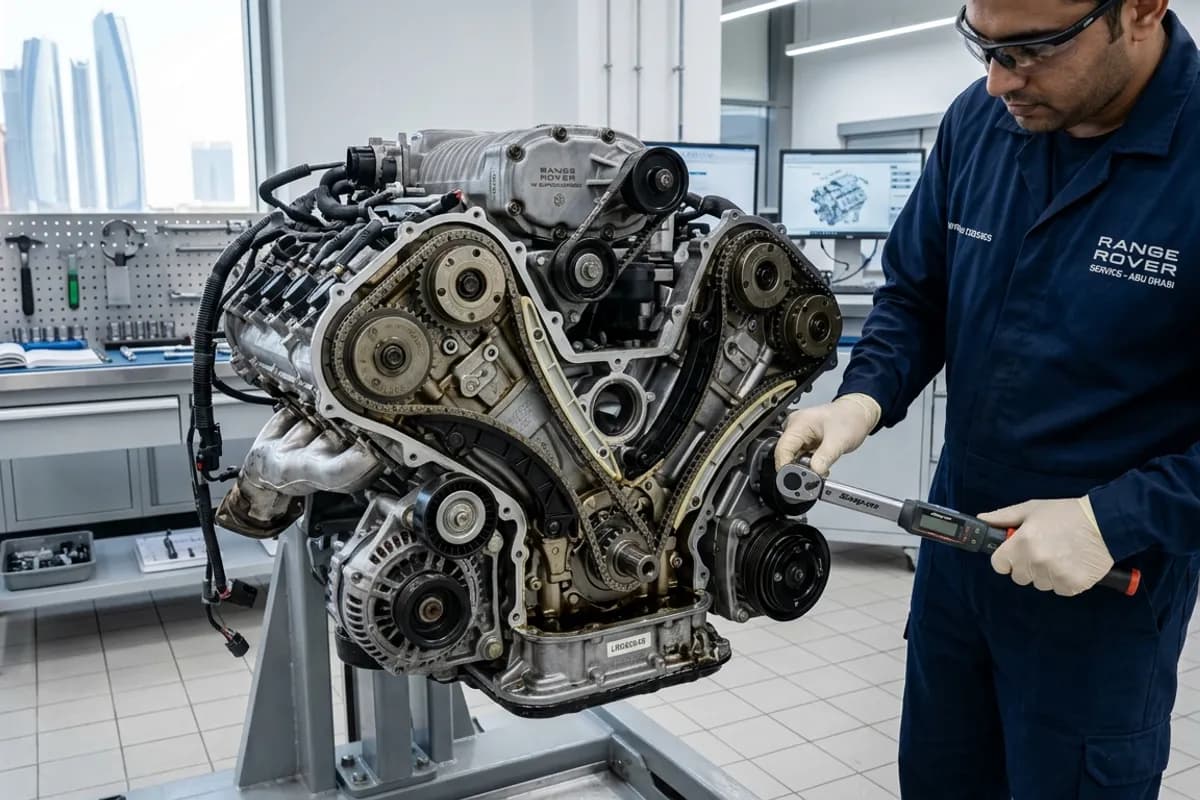
3. 3.5L EcoBoost: intercooler condensation misfire (about 2011–2014)
Symptoms: A stumble, misfire or brief loss of power under hard acceleration, especially in humid weather. Sometimes the check-engine light flashes.
Why it happens: Moisture condenses inside the intercooler, then gets drawn into the engine all at once when you accelerate hard. Abu Dhabi's coastal humidity can make this more noticeable.
Fix: Ford released revised parts and software for this issue. A specialist can check whether your engine has the update.
4. Coolant intrusion on certain 1.5L and 2.0L EcoBoost engines (mid-2010s)
Symptoms:
- Coolant level keeps dropping with no visible leak
- White exhaust smoke on start-up
- Misfires, often on the middle cylinders
- Overheating
Why it happens: On some engines of this era, coolant can find its way into the cylinders. Revised engine designs were introduced later. Owners widely report that later 1.5L engines, from around 2019, largely resolved the issue.
Fix: This depends on how far it has gone. Early detection matters. Once coolant has contaminated the cylinders, the repair often means a replacement block or engine assembly.
5. Carbon build-up on direct-injection engines
Symptoms: Rough idle, hesitation, misfires and gradual power loss, typically at higher mileage.
Why it happens: Direct injection sprays fuel straight into the cylinder, so fuel never washes over the intake valves. Oil vapour then bakes on as carbon. Second-generation 3.5L EcoBoost engines (from 2017) added port injection, which reduces this.
Fix: Intake valve cleaning, for example walnut blasting, followed by a road test and adaptation reset.
6. 5.0L V8: oil consumption and ticking
Symptoms: The oil level drops between services, a light ticking is audible, and oil warnings may appear.
Why it happens: Some owners of newer-generation 5.0L engines (from around 2018) report higher than expected oil consumption. Ford issued service guidance for certain models.
Fix: Run an oil consumption test, then carry out diagnosis and any repairs it identifies.
7. Turbocharger wear (all EcoBoost engines)
Symptoms: Whistling or whining, blue or grey smoke, oil in the intercooler pipes, and loss of boost or power.
Why it happens: Turbos run extremely hot. Old or degraded oil and shutting the engine off straight after hard driving both shorten turbo life, and both are made worse by UAE heat.
Fix: Diagnose the cause first, such as oil supply or boost leaks, then repair or replace the turbo.
Ford engine problems at a glance
| Engine | Common issue | Typical warning signs | Usual fix |
|---|---|---|---|
| 3.5L EcoBoost (earlier) | Timing chain wear | Cold-start rattle, P0016–P0019 codes | Timing chain kit + phaser inspection |
| 3.5L EcoBoost (2017–2020) | Cam phaser rattle | Loud rattle on cold start | Updated cam phasers + timing components |
| 3.5L EcoBoost (2011–2014) | Intercooler condensation | Misfire under hard acceleration in humidity | Updated parts / software |
| Certain 1.5L & 2.0L EcoBoost | Coolant intrusion | Coolant loss with no leak, white smoke | Early diagnosis. Often block/engine replacement. |
| Direct-injection EcoBoost | Carbon build-up | Rough idle, misfires, power loss | Intake valve cleaning |
| 5.0L V8 (newer generation) | Oil consumption | Dropping oil level, ticking | Consumption test + targeted repair |
| All EcoBoost | Turbo wear | Whine, smoke, low boost | Root-cause fix + turbo repair or replacement |
Repair, rebuild or replace? How to decide
| Situation | Usually the best option |
|---|---|
| Noise or a warning light, engine running normally, no internal damage found | Targeted repair (for example, timing components or cam phasers) |
| Internal wear found but the block and crankshaft are serviceable | Engine rebuild with new bearings, seals, timing and machined parts as needed |
| Cracked block, severe coolant contamination or major internal failure | Replacement engine or long block |
| High-mileage car where repair costs approach the car's value | Get an itemised quote for each option and compare honestly |
A proper diagnosis comes before any of these decisions. That means a scan, compression or leak-down testing, an oil inspection and, where needed, a borescope look inside the cylinders. Learn more about our Ford engine repair and rebuild service.
Protecting a Ford engine in UAE heat
- Shorten your oil change interval. Use the oil grade and Ford approval specified for your engine.
- Let a turbo engine idle briefly after hard driving before switching off.
- Never ignore a cold-start rattle, coolant loss or a flashing check-engine light. If the light is flashing, read our emergency steps for a flashing check-engine light.
- Check coolant level weekly on engines known for coolant intrusion.
- Keep the AC system healthy. A failing cooling fan affects both AC and engine temperature. See why car AC stops cooling.
Ford engine repair at Garage Bay, Mussafah
Garage Bay diagnoses and repairs Ford EcoBoost and V8 engines at our climate-controlled workshop in Mussafah Industrial Area M-14. This covers everything from timing chain and cam phaser jobs to full engine rebuilds. We also handle Ford transmission repair.
Every job starts with computer diagnostics and an itemised quote. We provide complimentary enclosed flatbed transport for major rebuilds, and all work carries our 12-month / 20,000 km warranty. See our Ford service and repair page.
Need Immediate Diagnostic Assistance in Abu Dhabi?
Our 24/7 mobile response vans carry PIWIS 3, XENTRY, and ISTA+ factory diagnostic computers directly to your villa or parking tower in 20 minutes.
Frequently asked questions
Q: Is the Ford 3.5 EcoBoost a reliable engine?
It can be very durable when maintained well, and many reach high mileage. Its known weak points are timing chain wear on earlier engines, cam phaser rattle on some 2017–2020 engines, and intercooler condensation on early models. Frequent oil changes with the correct oil and early attention to cold-start rattles make the biggest difference.
Q: How do I know if my EcoBoost timing chain is stretched?
The most common early sign is a rattle lasting a few seconds after a cold start. It is often followed by a check-engine light with camshaft/crankshaft correlation codes (P0016 to P0019). A workshop can confirm chain stretch with diagnostic software before any parts are replaced.
Q: Can an EcoBoost engine be rebuilt?
Yes. If the block and crankshaft are serviceable, an EcoBoost engine can be rebuilt with new bearings, seals, timing components and machined parts as required. If the block is cracked or badly contaminated by coolant, a replacement engine or long block is usually the better option.
Q: How often should I change the oil in a turbocharged Ford in the UAE?
Follow your car's oil-life monitor as a maximum, but consider changing it sooner. Sustained heat, stop-start traffic and short trips all stress engine oil, and turbochargers depend on clean oil for cooling and lubrication. Always use the grade and Ford approval specified for your engine.
Q: What causes coolant loss with no visible leak on a Ford EcoBoost?
On certain mid-2010s 1.5L and 2.0L EcoBoost engines, coolant can leak internally into the cylinders. Warning signs include a falling coolant level, white exhaust smoke at start-up and misfires. Get it diagnosed promptly rather than topping up repeatedly, because continued driving can turn a repair into an engine replacement.
Sources
- 3.5L EcoBoost issues by model year: SlashGear, "Ford's 3.5-Liter EcoBoost Engine: Which Years Should You Avoid"
- 1.5L EcoBoost coolant intrusion and carbon build-up: 8020 Automotive, "The 4 Most Common Ford 1.5 EcoBoost Problems"